
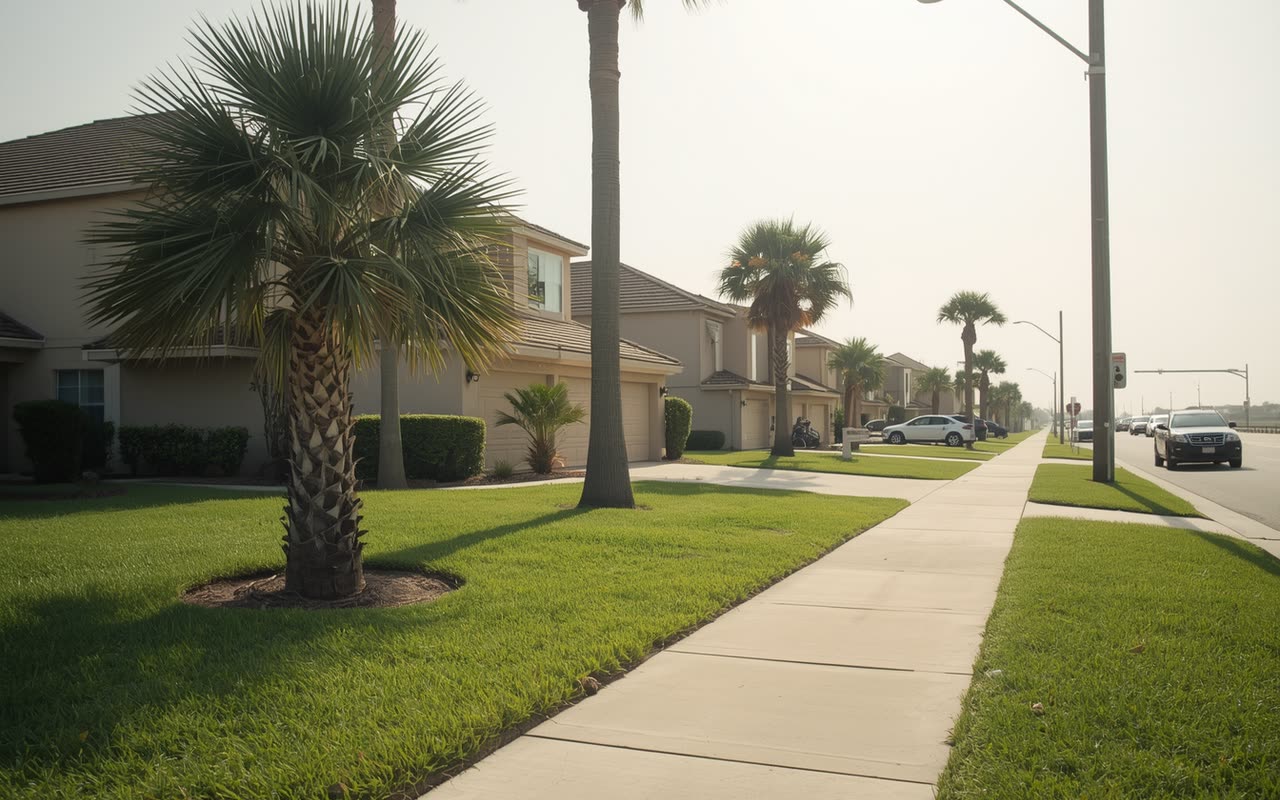
Clearwater has a split personality when it comes to water damage. Out on the barrier island, buildings are packed close to the Gulf, and many are condos, townhomes or low-rise buildings where one unit's problem becomes the next unit's problem. Back on the mainland, the housing looks more like the rest of Pinellas County: single-story block houses on slabs, a lot of them built between the 1970s and the 1990s.
Both sides share the same weather, which means salt in the air, a wet summer and a hurricane season that the city takes seriously. Below is how that plays out inside the walls.
Shared walls and water that travels
A condo or townhome behaves differently from a detached house, and the biggest difference is that water does not stay in the unit where it started.
A failed washing machine hose, a leaking water heater or an overflowing tub on an upper floor can send water through the ceiling below, down inside wall cavities and along shared pipe chases. A unit on the first floor can be soaked by a leak that never touched its own plumbing. That also means you may be dealing with several parties: your insurance, the association's insurance and a neighbor you have never met.
A few things worth knowing if you live in a multi-unit building:
- Report it right away. Many associations have their own rules about who handles what, and the master policy usually covers the building structure while your policy covers the interior, though the exact split varies.
- Moisture may be in places you cannot see. Ask for readings in the walls shared with neighboring units, not just the room that looks wet.
- Drying a unit next to an affected one matters. Water that moved through a wall cavity can leave a neighbor's side damp even if the drywall looks fine.
Our guide on the first 24 hours after water damage is a good checklist to hand to a board or a property manager.
Salt air, humidity and the air conditioner
Close to the water, salt in the air accelerates corrosion on metal fittings, and the coastal humidity gives air conditioners a hard job. The system has to cool the space and pull moisture out of it, and when it cannot keep up, the indoor air turns clammy.
In Clearwater homes, a few AC-related patterns show up again and again:
- A clogged condensate line. The drain that carries away the water your coil removes can clog with algae and slime. When it backs up, water spills into the drain pan, then over it, and then into the ceiling or the closet where the air handler sits.
- A unit that is too big. An oversized system cools the room fast and shuts off before it has dehumidified. The thermostat reads cool while the walls feel damp.
- Sweating around vents. Where cold supply air meets humid air in a closet or ceiling, you will often see droplets, stained ceiling tiles or dark spots near registers.
- Closed-up units. A winter-resident condo that is shut for the summer with the thermostat set high can grow mold in a few weeks.
To go further into controlling moisture in the air, read about humidity in Florida houses.
Surge, flood zones and the island
Barrier islands are the first places to take surge. The storms of 2024 pushed water into parts of Clearwater, and those who had never thought of their street as exposed learned otherwise. If your unit is on a ground floor or at street level, surge is the threat that matters most.
Surge water carries sand, salt and contamination, and it does not behave like a supply line leak. It is treated as the most contaminated category of water, and porous materials that it touched, such as drywall, insulation and carpet padding, typically come out rather than get dried in place. Flood damage restoration explains what happens to a house or unit after that kind of event.
Your flood zone is a phone call to the city or county away. Condo and homeowner policies tend to exclude flood, so check whether you carry a separate policy, and remember a fresh NFIP policy usually waits a month. Rules on "substantial damage" can apply when repairs near half the building's value; the building office at city hall can explain.
Inland block houses from the 1970s to the 1990s
Away from the water, Clearwater's neighborhoods have a lot of single-story concrete block houses with stucco, on slabs. They are sturdy, but they have habits.
Roofs and flashing. Roofs from the 1980s and 1990s are often at or past their expected life. Look for stains near chimneys, skylights, vent pipes and valleys.
Stucco and windows. Hairline cracks in stucco let rain into the block, and aging window seals can wick water into the wall below.
Water heaters and supply lines. Heaters in a garage or closet and the flexible lines on toilets and sinks are frequent sources of sudden leaks.
Slab leaks. Pipes that run under or in the slab can develop pinholes. Warm spots on the floor, an unexplained rise in the water bill and the sound of running water with all fixtures off are the usual hints.
Where mold tends to show up
- Behind furniture pushed against an exterior wall, especially in bedrooms with the AC set high
- Inside the closet that holds the air handler
- On the ceiling directly under a roof leak or an AC drain overflow
- Behind bathroom vanities and under sinks
- In the back corners of shower surrounds and along grout lines in poorly ventilated bathrooms
- On the underside of condo balcony doors and sliding-door tracks
Per EPA guidance, a hard-surface spot of roughly ten square feet or under is often a homeowner job if you wear an N95, gloves and eye protection. Larger growth, growth inside a wall or anything that returns after you remove it points to a moisture source that has to be found. A mold inspection looks for that source using moisture readings and a thermal camera, and mold removal is the job that follows when the growth is real.
Neighbors on the map
Just south, St. Petersburg has the older bungalow neighborhoods, and Largo sits inland between the two cities. Across the bay, our home page covers Tampa.
Who this helps
This page is aimed at people who own or rent in Clearwater and have found a wet ceiling, a musty closet or damp walls after a storm. It is also for condo owners and board members who want to understand how a leak in one unit becomes a building problem. If water is spreading, take photos and call right away, because it will not stop for the weekend.